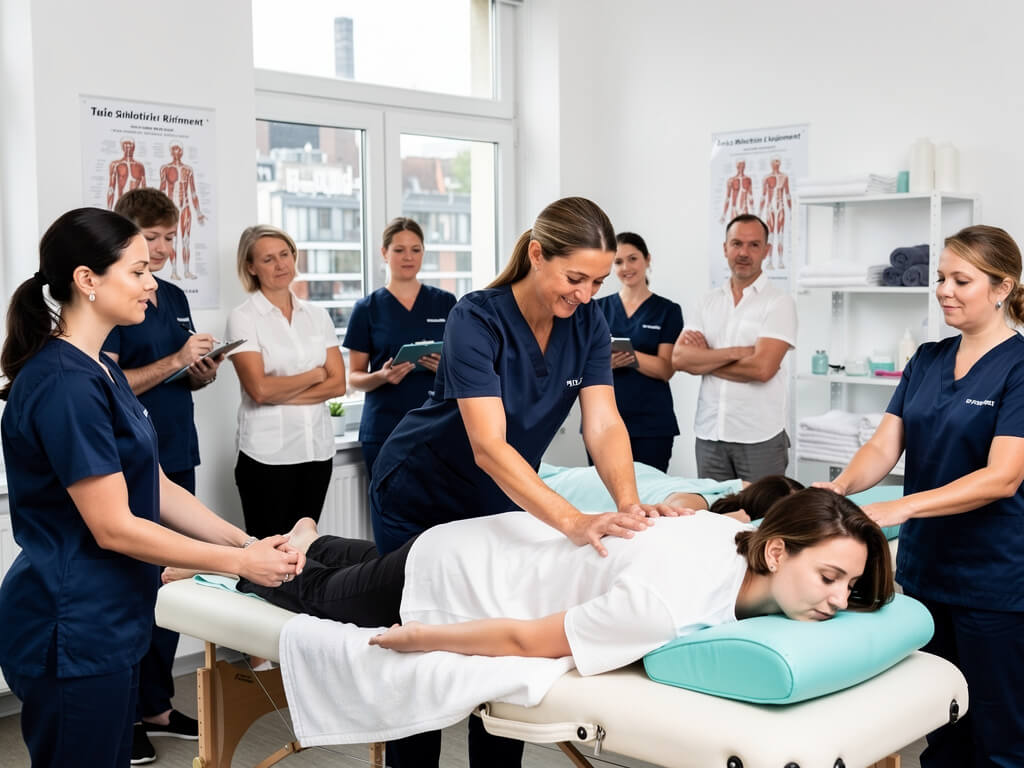
You’ve been thinking about it for months. Maybe years. A career change into massage therapy sounds appealing — helping people, working with your hands, being your own boss. But something’s holding you back.
Usually, it’s one of those persistent myths about massage therapy that float around. The ones that make training seem impossible, impractical, or just not worth it. We hear them constantly from people considering our courses here in Berlin.
Time to set the record straight. Because these misconceptions aren’t just wrong — they’re stopping good people from pursuing a career they’d actually love.
Myth 1: “You Need to Be Naturally Gifted with Your Hands”
The Reality: Massage is a Learned Skill
This might be the most damaging myth of all. People assume massage therapy is some mystical talent you’re born with. That you either have “healing hands” or you don’t.
Complete nonsense.
Massage therapy is a technical skill. Like playing piano or learning to cook. Yes, some people pick it up faster than others. But anyone with functioning hands and the willingness to learn can become proficient.
We’ve trained accountants, teachers, retail managers, and IT professionals. None of them started with magical massage abilities. They learned proper technique, practiced consistently, and developed their skills over time.
The key is quality training. Not just watching YouTube videos or attending a weekend workshop. Proper education that breaks down the techniques, explains the anatomy, and gives you hundreds of hours of supervised practice.
What Actually Matters
Willingness to learn. Attention to detail. The ability to listen to clients and adapt your approach. These are the qualities that make successful massage therapists. Not some innate gift.
Myth 2: “The Training Takes Forever and Costs a Fortune”
The Numbers Don’t Add Up
People often compare massage therapy training to a university degree. Four years, massive debt, uncertain job prospects at the end.
That’s not how massage training works.
A comprehensive massage therapy course typically runs 6-12 months part-time. You can often continue working while you train. The investment is significant but manageable — especially compared to other professional qualifications.
And here’s the thing about return on investment: massage therapists can start earning immediately after graduation. No years of unpaid internships or entry-level positions.
The Real Cost of Not Training
Staying in a job you hate for another five years? That has a cost too. The stress, the lack of fulfillment, the regret of not pursuing something you’re genuinely interested in.
When you factor in the potential earnings and job satisfaction, massage therapy training often pays for itself within the first year.
Myth 3: “There’s No Real Career Path — It’s Just a Side Hustle”
Massage Therapy is a Legitimate Healthcare Profession
This myth particularly frustrates us. Massage therapy isn’t a hobby or a way to make pocket money. It’s a recognized healthcare profession with clear career progression.
Experienced massage therapists can:
- Build thriving private practices
- Specialize in specific techniques or client populations
- Work in medical settings alongside physiotherapists and doctors
- Teach and mentor new therapists
- Open their own clinics or wellness centers
- Partner with established businesses (like our graduates do with The Massage Lab)
The earning potential is substantial. Good massage therapists in Berlin charge €80-120 per session. Work 20 sessions a week, and you’re looking at €6,400-9,600 monthly. Not exactly side-hustle money.
Building a Sustainable Practice
The key is approaching it professionally from day one. Learning not just the techniques but the business skills. Understanding client retention, marketing, and financial management.
That’s why we don’t just hand out certificates. We teach the complete package — technical skills and business knowledge. Because a certificate without practical support is just expensive paper.
Myth 4: “You Can’t Make Good Money as a Massage Therapist”
The Income Reality
This myth usually comes from people who’ve never actually researched massage therapy earnings. Or who’ve met therapists working in low-paying spa environments.
Skilled massage therapists with their own practices earn well. Very well.
The difference is positioning and business knowledge. Therapists who understand their value and market themselves properly don’t struggle financially.
Multiple Revenue Streams
Successful massage therapists rarely rely on one income source:
- Regular clients (the foundation of any practice)
- Specialized treatments (sports massage, pregnancy massage)
- Corporate wellness programs
- Workshop teaching
- Product recommendations
- Partnership arrangements with other healthcare providers
Diversification creates stability. And stability creates good income.
Myth 5: “It’s Too Physical — You’ll Burn Out Your Body”
Proper Technique Prevents Injury
Yes, massage therapy is physical work. But so is construction, nursing, and dozens of other careers. The difference is learning to work smart, not just hard.
Poor technique causes injury. Proper body mechanics, regular self-care, and understanding your limits prevent it.
We spend significant time teaching ergonomics and injury prevention. How to use your body efficiently. When to refer clients to other practitioners. How to structure your schedule for sustainability.
The Longevity Factor
Many massage therapists work well into their 60s and 70s. Because they’ve learned to work sustainably. They use their body weight instead of muscular force. They take breaks between clients. They maintain their own physical health.
The therapists who burn out are usually the ones who never learned proper technique or tried to work too many hours without adequate recovery.
The Real Barriers (And How to Overcome Them)
Language Barriers in Berlin
Here’s a legitimate concern for English speakers in Berlin: most massage training is only available in German. That’s a real barrier, not a myth.
Which is exactly why we created English Massage Training. Because language shouldn’t prevent good people from pursuing massage therapy careers.
Imposter Syndrome
The feeling that you’re not qualified to help others. That you don’t belong in healthcare. That people will see through you.
This affects almost everyone starting a new career. The solution isn’t waiting until you feel ready (you never will). It’s getting proper training and starting with confidence in your education.
Fear of Self-Employment
Many people worry about the business side. Marketing, taxes, client management.
Valid concerns. But entirely manageable with the right support and education. We don’t just teach massage techniques — we teach the business skills that make practices successful.
Making the Decision
These myths persist because career changes are scary. It’s easier to believe something is impossible than to admit you’re afraid of taking the leap.
But here’s what we’ve learned training hundreds of massage therapists: the people who succeed aren’t the ones without fear. They’re the ones who act despite it.
The massage therapy industry needs skilled, professional practitioners. Especially in Berlin’s international community. The demand is there. The earning potential is real. The career satisfaction is genuine.
What’s missing is your decision to start.
—
This content is for educational purposes only and does not constitute medical or career advice. Always consult with qualified professionals when making significant career decisions.